
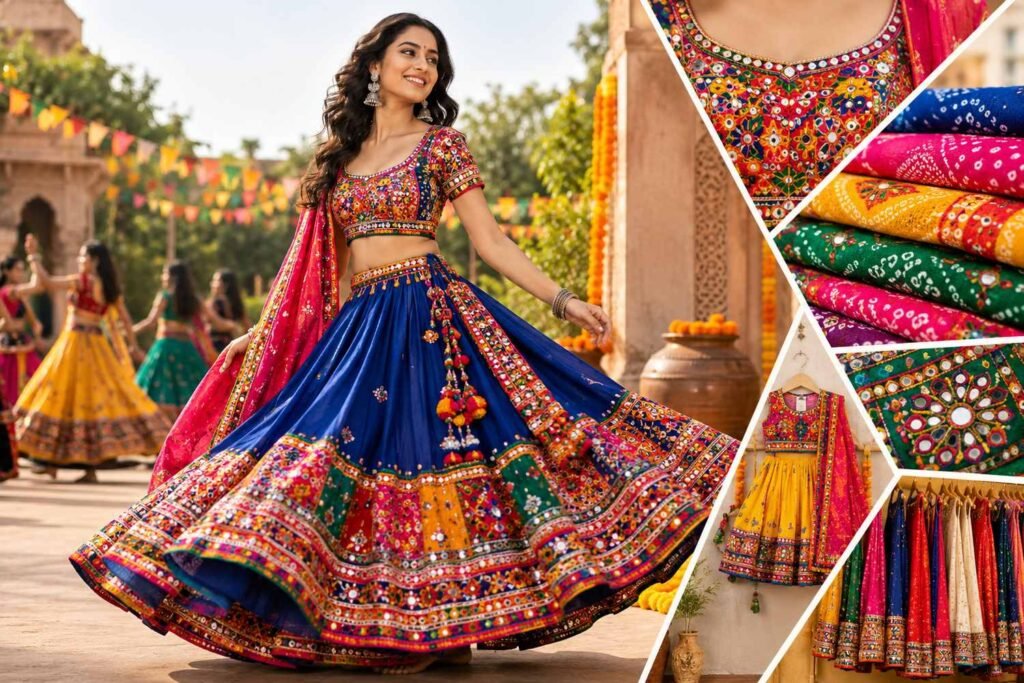
Scalane Global offers Chaniya Choli wholesale for the USA for retailers, boutiques, wholesalers, distributors, ethnicwear stores, online fashion businesses, importers and other B2B buyers looking to source Indian Chaniya Choli collections for the U.S. market.
Our wholesale collections can be developed around traditional Gujarati Chaniya Choli, Garba styles, Navratri collections, mirror work, embroidered designs, Bandhani combinations, cotton Chaniya Choli, contemporary festive styles, kids’ Chaniya Choli and extended-size options.
For U.S. buyers, wholesale purchasing is not simply about selecting attractive garments. A commercially useful collection needs the right combination of design, fabric, sizing, colour assortment, product variations, packaging, quality consistency and replenishment planning.
Scalane Global works with buyers to develop Chaniya Choli collections according to their intended market, customer profile, product positioning and order requirements.
Chaniya Choli Wholesale for U.S. Retailers and B2B Buyers
The U.S. market includes a wide range of businesses selling Indian ethnicwear and festival apparel. A buyer may need a small curated assortment for a boutique, a broader range for an ethnicwear retailer, or multiple designs and sizes for wholesale distribution.
Chaniya Choli wholesale collections can be developed for:
Indian ethnicwear retailers in the USA
Ethnic fashion boutiques
Indian clothing stores
Chaniya Choli wholesalers
Apparel distributors
Importers of Indian clothing
Online fashion businesses
D2C ethnicwear brands
Festival and Navratri retailers
Garba-focused businesses
Cultural and community organizations
Dance and cultural apparel businesses
Seasonal fashion retailers
Multi-location retail businesses
The appropriate assortment depends on the buyer’s sales channel and target customer rather than simply selecting the largest possible number of designs.
For example, a boutique may require a carefully curated collection with multiple colourways, while a wholesaler may require greater SKU depth and broader size availability.
Why U.S. Buyers Source Chaniya Choli from India
India is an important manufacturing base for Indian ethnicwear, including traditional and contemporary Chaniya Choli collections.
For U.S. buyers, sourcing directly from India can provide access to:
Gujarati-inspired designs
Traditional festive styling
Mirror-work embellishment
Indian embroidery techniques
Bandhani textiles and combinations
Cotton and other apparel fabrics
Garba and Navratri-oriented collections
Multiple garment components and accessories
Manufacturer-led product development
The sourcing process should be approached as a product-development and quality-control exercise rather than simply purchasing finished garments.
U.S. buyers can define their requirements around design, fabric, colours, sizing, embellishment, packaging and branding before moving into bulk production.
Types of Chaniya Choli Available for U.S. Wholesale Buyers
A U.S. wholesale collection can contain different product families depending on the intended market.
Traditional Chaniya Choli
Traditional Chaniya Choli can be developed around Gujarati and Indian festive aesthetics, including decorative borders, traditional motifs, mirror work, embroidery and coordinated colour combinations.
These products can be suitable for ethnicwear boutiques, Indian clothing retailers and customers looking for traditional festive apparel.
Gujarati Chaniya Choli
Gujarati Chaniya Choli focuses specifically on Gujarati-inspired styling and can be positioned for customers purchasing clothing for Garba, Navratri, cultural events and festive occasions.
Collections can include traditional and contemporary interpretations while maintaining recognizable Gujarati design elements.
Garba Chaniya Choli
Garba-focused collections can be developed around movement, colour, embellishment and festive styling.
For U.S. retailers, these collections may be planned around the seasonal demand associated with Garba events and Indian community celebrations.
Navratri Chaniya Choli
Navratri collections can include vibrant colour combinations, mirror work, embroidery, decorative borders and coordinated Chaniya, Choli and Dupatta combinations.
Because Navratri is seasonal, U.S. buyers should consider collection planning and inventory timing well before the selling period.
Mirror Work Chaniya Choli
Mirror work can be incorporated at different levels depending on the intended product positioning.
Buyers can specify:
Mirror size
Mirror placement
Density
Decorative pattern
Combination with embroidery
Border treatment
Chaniya and Choli coordination
The appropriate mirror-work specification should also consider garment construction, handling and the intended retail market.
Embroidered Chaniya Choli
Embroidery can range from relatively simple decorative details to more elaborate garment designs.
U.S. buyers can develop collections around:
Floral motifs
Geometric motifs
Traditional-inspired patterns
Decorative borders
Neckline embroidery
Sleeve embroidery
Chaniya panels
Coordinated Choli and Dupatta detailing
Embroidery can also be combined with mirror work, appliqué, borders or other decorative elements.
Bandhani Chaniya Choli
Bandhani can be used as an important design element within Gujarati and festive Chaniya Choli collections.
Depending on the product concept, Bandhani may be incorporated through the Chaniya, Choli, Dupatta or coordinated components.
Buyers should clearly specify whether they require actual Bandhani textile construction or a Bandhani-inspired visual treatment so that the product specification remains accurate.
Cotton Chaniya Choli
Cotton Chaniya Choli can be developed for buyers looking for breathable and versatile fabric options.
Cotton collections can include:
Printed cotton
Embroidered cotton
Mirror-work cotton
Gujarati-inspired cotton
Garba-oriented cotton
Contemporary cotton designs
Fabric weight, construction, colourfastness, shrinkage considerations and finishing should be evaluated during product development.
Kids’ Chaniya Choli
Children’s Chaniya Choli can be developed as a dedicated wholesale category or as part of a broader family collection.
U.S. retailers may consider:
Age-based size ranges
Coordinated colours
Lightweight embellishment
Comfortable fabrics
Matching family collections
Mother-and-daughter combinations
Festive and Garba designs
Children’s garments require particular attention to fit, finishing, construction and decorative components.
Plus Size Chaniya Choli
Extended-size Chaniya Choli can help U.S. retailers develop a broader size assortment rather than restricting collections to standard size ranges.
For wholesale development, extended sizes should be treated as properly developed garment sizes rather than simply increasing the dimensions of a standard pattern.
Important considerations include:
Body measurements
Choli fit
Chaniya flare
Waist construction
Length
Dupatta dimensions
Embellishment placement
Proportion of motifs and borders
Size-specific grading
Chaniya Choli Wholesale Collections for the U.S. Market
A wholesale collection should be planned as a group of commercially related products rather than as unrelated individual designs.
A structured collection can contain several product levels.
Core Collection
The core collection can contain commercially versatile designs intended to remain relevant beyond one specific festival.
This may include:
Traditional designs
Gujarati-inspired designs
Moderate mirror work
Embroidered styles
Cotton collections
Versatile colour combinations
Festival Collection
A festival collection can focus more strongly on Navratri, Garba and Dandiya-related occasions.
This may include:
Brighter colour combinations
Higher decorative detail
Mirror work
Embroidery
Decorative borders
Coordinated sets
Kids’ collections
Family-oriented designs
Contemporary Collection
Contemporary Chaniya Choli can combine traditional Indian elements with more modern colour combinations, silhouettes, embellishment patterns or styling.
This can be useful for U.S. boutiques and online fashion businesses targeting customers who want Indian-inspired clothing with a contemporary appearance.
Colour Planning for U.S. Wholesale Orders
Colour selection can have a significant impact on the commercial usefulness of a wholesale collection.
Instead of purchasing many unrelated colours, buyers can develop a coordinated colour architecture.
For example, a collection may include:
Bright festive colours
Jewel-inspired colour combinations
Traditional Gujarati combinations
Neutral or understated options
Pastel combinations
Contemporary colour palettes
Coordinated family colours
The exact colour assortment should be based on the buyer’s target customers, selling channel, season and existing product range.
Colour planning can also be linked to SKU planning so that the buyer does not unintentionally create excessive inventory through too many low-volume variations.
Fabric Selection for Wholesale Chaniya Choli
Fabric selection affects the appearance, comfort, movement, construction and overall positioning of Chaniya Choli.
Potential fabric categories include:
Cotton
Rayon
Poly-cotton
Georgette
Silk or silk-blend fabrics
Other suitable apparel fabrics based on the design
The correct fabric should be selected according to the intended garment construction and decoration.
For wholesale orders, buyers should evaluate:
Fabric composition
Weight
Texture
Drape
Colour
Print
Embellishment compatibility
Shrinkage considerations
Colourfastness
Garment finishing
A sample should be evaluated before committing to bulk production when fabric performance is an important part of the product specification.
Chaniya, Choli and Dupatta Coordination
A Chaniya Choli set is more than a skirt and blouse. The relationship between the individual components affects the overall appearance of the finished product.
Chaniya
The Chaniya can be developed with different levels of flare, panel construction, borders, prints, embroidery and mirror work.
Choli
The Choli can be coordinated through:
Neckline
Sleeve style
Embroidery
Mirror work
Colour
Border
Fabric
Decorative motifs
Dupatta
The Dupatta can complement the Chaniya and Choli through:
Matching colours
Contrast colours
Border treatments
Printed designs
Embroidery
Mirror work
Bandhani or Bandhani-inspired elements
For wholesale collections, consistency between these three components is important because buyers are purchasing a finished product concept rather than isolated garment pieces.
Size Planning for U.S. Wholesale Buyers
Size planning should be established before bulk production.
A U.S. buyer should provide or approve the required size structure rather than assuming that one standard Indian size chart will automatically suit the intended U.S. customer base.
Size planning may include:
Standard adult sizes
Extended sizes
Kids’ sizes
Custom measurements
Size-specific grading
Choli measurements
Chaniya waist measurements
Chaniya length
Dupatta dimensions
For custom wholesale collections, the buyer can provide a measurement chart or technical specification for development.
The approved measurement chart should then become part of the production reference so that bulk garments can be checked against the agreed specifications.
Wholesale Assortment and SKU Planning
One of the most important decisions for a U.S. buyer is determining how many individual SKUs to purchase.
A collection can become difficult to manage when every design is offered in too many colours and sizes without sufficient demand planning.
A structured assortment may instead group products into:
Design families
Colour families
Size groups
Price-positioning levels
Decorative levels
Festival collections
Core collections
Kids’ collections
Extended-size collections
This approach allows buyers to create a more manageable product catalogue while still offering variety.
SKU planning should also consider how products will be displayed online, coded internally, photographed, packaged and reordered.
Custom Chaniya Choli Wholesale for U.S. Buyers
Wholesale does not necessarily mean selecting only from an existing collection.
U.S. buyers can request custom wholesale development based on their requirements.
Customisation may include:
Design
Fabric
Colour
Chaniya construction
Choli design
Dupatta
Embroidery
Mirror work
Borders
Motifs
Tassels and trims
Size range
Labels
Packaging
Product coding
A buyer may provide a photograph, sketch, mood board, reference garment or technical specification as the starting point.
The development process can then move through sample creation, review, revisions and approval before bulk manufacturing.
Private Label Chaniya Choli Wholesale USA
U.S. fashion brands and retailers may also require Chaniya Choli under their own brand identity.
Private-label development can include:
Brand labels
Hangtags
Product codes
Care labels
Packaging
Brand-specific collections
Custom colourways
Custom designs
Retail-ready presentation
Private label is particularly relevant when the buyer wants the finished product to form part of its own ethnicwear or festivewear collection.
The brand requirements should be finalized before bulk production to reduce changes later in the manufacturing process.
OEM Chaniya Choli for U.S. Buyers
OEM production is suitable when the buyer has defined product specifications and requires manufacturing according to those specifications.
An OEM specification may include:
Product design
Fabric
Colour
Measurements
Size grading
Embroidery
Mirror work
Borders
Finishing
Labels
Packaging
The buyer and manufacturer should agree on the approved specification and sample before production begins.
Sampling Before Bulk Wholesale Production
Sampling is an important stage for international wholesale orders.
A buyer can use the sample to evaluate:
Overall design
Fabric
Colour
Fit
Construction
Embroidery
Mirror-work placement
Border treatment
Finishing
Chaniya flare
Choli proportions
Dupatta appearance
Where the collection is customized, revisions can be incorporated before the production specification is finalized.
The approved sample should serve as a reference for bulk production and quality control.
Quality Control for Chaniya Choli Wholesale Orders
Quality control should cover more than visual appearance.
Depending on the product, checks may include:
Fabric and material consistency
Measurements
Stitching
Seam quality
Embroidery
Mirror-work attachment
Border finishing
Colour consistency
Garment construction
Loose threads
Stains or visible defects
Component matching
Size labelling
Packaging
For customized products, inspection should also compare production pieces against the approved sample and agreed specifications.
Packaging for U.S. Wholesale Shipments
International wholesale packaging should protect garments during handling, transportation and storage.
Packaging requirements may vary according to the buyer’s distribution model.
Possible requirements include:
Individual garment packing
Size identification
SKU or product codes
Brand labels
Hangtags
Outer cartons
Assortment identification
Buyer-specific packing instructions
For larger wholesale shipments, carton organization can also be planned around SKU, size or colour to simplify receiving and warehouse handling.
Planning Chaniya Choli Orders Around the U.S. Festival Calendar
Navratri and Garba-related products are seasonal, so buyers should plan collections and production in advance.
A practical wholesale workflow can include:
Market planning → Collection selection → Sample development → Sample approval → Order confirmation → Production → Quality control → Packaging → Export documentation → Shipment → Receiving → Retail launch
The exact timeline depends on the design complexity, order quantity, customization, materials, packaging requirements and shipping method.
Seasonal buyers should avoid treating Navratri inventory as a last-minute purchase because custom development and production require sufficient planning.
Chaniya Choli Wholesale for U.S. Boutiques
Boutiques may prefer a curated collection rather than a very large catalogue.
A boutique-focused assortment can be built around:
Distinctive designs
Limited colour combinations
Traditional styles
Designer-oriented collections
Mirror-work pieces
Embroidered pieces
Contemporary styles
Kids’ matching products
Extended-size options
The objective is to create a collection that fits the boutique’s existing customer profile rather than simply maximizing the number of SKUs.
Chaniya Choli Wholesale for U.S. Ethnicwear Stores
Indian ethnicwear stores may require broader assortment depth.
Their collection can include:
Gujarati Chaniya Choli
Garba Chaniya Choli
Navratri collections
Traditional designs
Mirror-work collections
Embroidered styles
Bandhani combinations
Cotton collections
Kids’ Chaniya Choli
Extended-size Chaniya Choli
The assortment can be adjusted according to the store’s customer base, location, festival demand and existing inventory.
Chaniya Choli Wholesale for U.S. Online Sellers
Online sellers require additional attention to product information and SKU management.
Before ordering, buyers should consider:
Product names
SKU codes
Size charts
Variant structure
Colour names
Fabric information
Product descriptions
Product photographs
Individual packaging
Inventory tracking
Replenishment requirements
A wholesale supplier should be able to work from a clearly defined product specification so that the physical product matches the information presented to the online customer.
Chaniya Choli Wholesale for U.S. Importers and Distributors
Importers and distributors may require greater assortment depth because products can be supplied onward to multiple retailers or sales channels.
For these buyers, important considerations include:
Product range
SKU depth
Size availability
Colour ratios
Packaging
Carton organization
Product coding
Quality consistency
Repeat-order capability
Seasonal collection planning
Importers should also confirm destination-market requirements and documentation with their customs broker or relevant compliance professionals.
Building a Repeatable Wholesale Collection
A successful wholesale program should not depend entirely on one seasonal order.
Once a collection has been established, buyers can identify:
Strong-performing designs
Preferred colours
Popular size groups
Designs suitable for replenishment
Products requiring modification
Seasonal products
Products suitable for year-round sales
This information can be used to develop subsequent collections and repeat orders.
A repeatable product-development process can make future ordering more efficient because the buyer already has approved specifications, measurements, packaging requirements and quality expectations.
What U.S. Buyers Should Provide When Requesting a Wholesale Quote
A detailed inquiry helps the manufacturer understand the project accurately.
U.S. buyers should ideally provide:
Product category
Approximate order quantity
Required designs
Reference images, if available
Fabric preference
Colour requirements
Size range
Kids or adult requirement
Mirror work or embroidery requirements
Customization requirements
Private-label requirements
Packaging requirements
Target delivery destination
Required shipping method, if known
Required selling season
Any specific product or compliance requirements
The more clearly the product is specified, the easier it becomes to evaluate sample development, production requirements and commercial feasibility.
Chaniya Choli Wholesale USA — Built for B2B Orders
Scalane Global develops Chaniya Choli collections for U.S. B2B buyers looking for Indian festivewear and ethnicwear products from India.
Whether the requirement is for traditional Gujarati Chaniya Choli, Garba collections, Navratri wholesale, mirror-work designs, embroidered Chaniya Choli, Bandhani combinations, cotton collections, kids’ products, plus-size options or custom/private-label development, the product specification can be structured around the buyer’s intended market.
For a wholesale inquiry, buyers can share their required product type, quantity, designs, fabric, sizes, colours, customization, branding and packaging requirements.
This allows the collection to be evaluated around the actual requirements of the U.S. wholesale business rather than using a generic product list.
Request a Chaniya Choli Wholesale Quote for the USA
Share your product requirements with Scalane Global to discuss Chaniya Choli wholesale collections, custom development, private-label manufacturing and bulk orders from India.
How U.S. Buyers Can Plan a Chaniya Choli Wholesale Order
A wholesale Chaniya Choli order should begin with the commercial requirements of the U.S. business rather than with individual designs.
Before requesting samples or confirming an order, buyers should establish five core areas:
- Who will buy the products?
- Which product categories are required?
- What size and colour assortment is appropriate?
- What level of customization or branding is required?
- How will the finished products be packaged, shipped and sold?
This approach helps prevent a common wholesale problem: purchasing a visually attractive collection that does not fit the retailer’s actual customer base.
A U.S. boutique, ethnicwear retailer, online fashion brand and wholesale distributor can all purchase Chaniya Choli, but their assortment requirements can be substantially different.
U.S. Customer Profile and Collection Planning
The intended customer should influence the product mix.
For example, a retailer serving customers primarily interested in traditional Indian clothing may emphasize:
- Traditional Gujarati Chaniya Choli
- Mirror work
- Embroidery
- Bandhani combinations
- Traditional colour palettes
- Garba and Navratri designs
A contemporary fashion boutique may instead combine:
- Traditional-inspired designs
- Modern silhouettes
- Contemporary colour combinations
- Controlled embellishment
- Designer-oriented collections
- Premium-looking presentation
An online seller may require a wider variation of:
- Colours
- Sizes
- Product designs
- Coordinated sets
- Product photographs
- SKU variations
Therefore, the right wholesale assortment should be built around the buyer’s customer profile and sales channel.
How to Build a U.S. Wholesale Chaniya Choli Assortment
A useful assortment can be organized into product groups rather than treating every garment as an independent SKU.
Core Styles
These are designs intended to form the foundation of the collection.
They may include:
- Traditional Chaniya Choli
- Gujarati-inspired designs
- Cotton Chaniya Choli
- Moderate mirror-work styles
- Embroidered designs
- Versatile festive colour combinations
Statement Styles
Statement products can introduce stronger decorative elements.
These may include:
- More elaborate embroidery
- Higher mirror-work density
- Decorative borders
- More detailed motifs
- Coordinated embellishment
- Fashion-led colour combinations
Seasonal Styles
Seasonal products can be developed around:
- Navratri
- Garba
- Dandiya-related events
- Indian cultural celebrations
- Festival retail periods
Seasonal products should be planned separately from the core collection so that inventory decisions remain clear.
Family and Size Extensions
The collection can also include:
- Kids’ Chaniya Choli
- Mother-and-daughter combinations
- Extended-size Chaniya Choli
- Coordinated family colourways
These can expand the assortment without requiring an entirely separate product concept.
Size Ratio Planning for U.S. Wholesale
Size distribution should be decided before production.
A buyer should review historical sales data where available and determine which sizes are likely to require greater depth.
For new collections without historical sales data, buyers can develop a test assortment rather than committing heavily to every size.
Size planning can include:
- Adult standard sizes
- Extended sizes
- Kids’ sizes
- Custom measurements
- Different Choli measurements
- Different Chaniya waist measurements
- Length requirements
The final size chart should be approved before bulk production.
For custom orders, the buyer can provide a measurement chart in the preferred format. The manufacturer can then use the approved specifications for sample development and production.
Colour Ratio Planning
Colour planning is equally important.
A buyer may want a combination of:
- Bright festive shades
- Traditional combinations
- Jewel-inspired tones
- Pastels
- Neutrals
- Contemporary combinations
- Contrast-based designs
However, a large number of colours can quickly multiply the total SKU count.
For example:
10 designs × 5 colours × 6 sizes = 300 possible SKU combinations
This does not mean all 300 combinations must be ordered. It demonstrates why wholesale assortment planning should be performed before finalizing the purchase.
A buyer can select priority combinations and concentrate inventory around the most commercially relevant variations.
Managing SKU Complexity
SKU complexity can increase through the combination of:
- Designs
- Colours
- Sizes
- Fabrics
- Embellishment levels
- Packaging variations
- Branding variations
A structured SKU system can make receiving, inventory management and reordering easier.
For example, an internal buyer code could identify:
Design + Colour + Size
The exact coding structure can be determined by the buyer according to its inventory system.
For online sellers, the same SKU structure can also help connect physical inventory with website listings and order-management systems.
Wholesale Chaniya Choli Sample Approval
Before bulk production, the buyer should evaluate the sample against the agreed product specification.
Important areas include:
Design
Does the garment reflect the approved reference or design brief?
Fabric
Does the fabric have the expected weight, texture, drape and appearance?
Colour
Does the actual colour correspond with the approved reference?
Fit
Are the Choli measurements and Chaniya proportions correct?
Decoration
Are embroidery, mirror work, borders and motifs positioned correctly?
Construction
Are stitching, seams, finishing and garment components satisfactory?
Presentation
Does the finished product meet the intended retail positioning?
Once the sample is approved, the approved version should become the reference for production.
Pre-Production Approval for U.S. Orders
For customized wholesale orders, pre-production approval can reduce misunderstandings.
The production reference may include:
- Approved sample
- Fabric specification
- Colour references
- Measurement chart
- Size grading
- Embroidery reference
- Mirror-work placement
- Border specification
- Label requirements
- Packaging instructions
- SKU information
The more detailed the production reference, the easier it is to compare finished products against the agreed requirements.
Quality Control for U.S. Wholesale Chaniya Choli
Quality control should be integrated throughout production rather than considered only after manufacturing is complete.
A wholesale QC process can review:
Fabric and Material
- Fabric consistency
- Visible defects
- Colour consistency
- Construction suitability
Measurements
- Waist
- Length
- Choli measurements
- Sleeve measurements where applicable
- Dupatta dimensions
Stitching
- Seam quality
- Thread finishing
- Loose threads
- Construction consistency
Embroidery
- Motif placement
- Stitch consistency
- Thread finishing
- Design alignment
Mirror Work
- Attachment
- Placement
- Consistency
- Loose or unstable decorative components
Garment Appearance
- Stains
- Visible defects
- Uneven finishing
- Incorrect components
- Mismatched pieces
Labelling and Packaging
- Correct size
- Correct SKU
- Brand information where applicable
- Packaging according to the approved instructions
For customized orders, QC should compare production against the approved sample and specification.
Packaging Requirements for U.S. Wholesale Buyers
Packaging should be discussed before production rather than at the shipment stage.
Depending on the buyer’s distribution model, requirements may include:
- Individual polybag or protective garment packaging
- Size labels
- SKU labels
- Brand labels
- Hangtags
- Care information
- Carton markings
- Assortment identification
- Buyer-specific packaging instructions
The final packaging method should consider the buyer’s warehouse, retail or e-commerce operation.
For online sellers, individual product packaging may be particularly useful because products can potentially move from warehouse inventory directly toward customer fulfillment.
Export Documentation and U.S. Import Planning
International wholesale shipments require appropriate export and import documentation.
The exact documentation depends on the shipment structure, product classification, commercial arrangement, carrier and destination requirements.
Typical commercial/export documentation may include items such as:
- Commercial invoice
- Packing list
- Shipping documentation
- Product description
- HS classification information
- Country-of-origin information where applicable
- Other documents required for the specific shipment
U.S. importers should confirm applicable U.S. customs, tariff, labeling and product requirements with their customs broker or qualified compliance professional.
Product classification should not be assumed solely from a general product name because the applicable classification can depend on the actual garment composition and construction.
Country of Origin and Product Information
For U.S.-bound apparel shipments, buyers should ensure that product information and labeling are addressed during product development rather than after manufacturing.
Depending on the product and sales arrangement, requirements may relate to:
- Country of origin
- Fiber composition
- Care information
- Size information
- Brand or manufacturer information
- Packaging
- Retail labeling
The buyer should communicate any specific U.S. market requirements before production begins.
Scalane Global can work from buyer-provided labeling and packaging specifications for applicable orders.
Shipping Chaniya Choli from India to the USA
Shipping arrangements should be evaluated according to:
- Order quantity
- Shipment dimensions
- Required delivery schedule
- Destination
- Air or sea freight requirements
- Buyer preferences
- Shipment urgency
- Packaging configuration
For larger wholesale orders, buyers may evaluate sea freight depending on the shipment economics and schedule.
For smaller or time-sensitive shipments, air freight may be considered.
The appropriate method depends on the individual shipment rather than a single universal option.
Landed-Cost Planning for U.S. Buyers
A buyer should evaluate the total landed cost rather than only the factory or wholesale product cost.
Potential cost components can include:
Product cost + packaging + inland movement + export-related charges + freight + insurance where applicable + customs duties/taxes/fees + U.S. handling or delivery costs
The exact landed cost varies according to the product, shipment structure, destination, classification, freight method and other commercial factors.
For this reason, buyers should establish the complete landed-cost model before committing to a large seasonal inventory purchase.
Navratri Inventory Planning for U.S. Retailers
Navratri can create a concentrated selling period for businesses serving Indian and South Asian communities in the USA.
Retailers should consider the complete cycle:
Market research → Collection planning → Product development → Sampling → Approval → Production → QC → Export → Customs/import processing → Warehouse receiving → Retail launch
The exact schedule depends on the order and production requirements.
Buyers ordering customized or private-label collections should allow additional development time compared with purchasing an already-developed product range.
Avoiding Last-Minute Seasonal Orders
One of the most common risks in seasonal apparel purchasing is waiting until the selling season is close before finalizing inventory.
A last-minute order can create pressure around:
- Sample approval
- Production
- Quality inspection
- Packaging
- Freight
- Customs processing
- Warehouse receiving
- Retail launch
U.S. buyers planning Navratri collections should therefore work backward from their intended selling period and establish internal deadlines for product approval and inventory arrival.
Repeat Orders and Seasonal Replenishment
A wholesale relationship can become more efficient when successful products are documented.
For each approved product, buyers can retain:
- Product code
- Sample reference
- Fabric details
- Colour reference
- Size chart
- Embellishment specification
- Packaging requirement
- Label specification
- Approved photographs
- Previous order information
This creates a reference for future production and can simplify repeat orders.
Future collections can then combine proven designs with new colours, updated embellishment or new silhouettes.
Refreshing a U.S. Chaniya Choli Collection
A buyer does not necessarily need to replace the entire collection every season.
A collection can be refreshed by:
- Introducing new colours
- Adding new mirror-work patterns
- Developing new embroidery motifs
- Updating borders
- Introducing new fabrics
- Adding new size options
- Creating new kids’ styles
- Adding contemporary designs
- Retaining selected proven products
This can create continuity while giving customers new products.
Custom Chaniya Choli Wholesale vs Ready Collections
U.S. buyers generally have two broad approaches.
Ready or Existing Collection
This approach can be suitable when the buyer wants:
- Faster product selection
- Established designs
- Limited customization
- Straightforward assortment planning
Custom Wholesale Development
This approach can be suitable when the buyer wants:
- Specific colours
- Custom designs
- Defined measurements
- Unique embroidery
- Specific mirror-work placement
- Private branding
- Custom packaging
- Exclusive product development
The appropriate model depends on the buyer’s business strategy, development requirements and order structure.
Private Label vs OEM vs Custom Wholesale
These terms should not be treated as identical.
Custom wholesale focuses on developing or modifying products for a wholesale order.
Private label focuses on manufacturing products that are sold under the buyer’s own brand.
OEM generally refers to manufacturing according to buyer-defined specifications.
A single U.S. buyer can potentially combine these models—for example, ordering a custom Chaniya Choli collection manufactured under its own private label.
The exact production workflow should be agreed during the inquiry and sample-development stage.
Chaniya Choli Wholesale for U.S. Online Businesses
Online businesses should evaluate products not only as garments but as e-commerce SKUs.
Before ordering, buyers should consider:
- Product photography
- Variant naming
- Size charts
- Fabric information
- Product descriptions
- Colour representation
- SKU codes
- Inventory levels
- Individual packaging
- Returns and customer-service considerations
For online collections, consistency between the product received and the product displayed on the website is particularly important.
The manufacturer should therefore work from clearly approved specifications.
Chaniya Choli Wholesale for U.S. Distributors
Distributors may require a broader product portfolio because their inventory can serve multiple downstream customers.
A distributor-focused collection may require:
- Multiple design families
- Multiple colourways
- Multiple size groups
- Kids’ products
- Seasonal collections
- Traditional styles
- Contemporary styles
- Different decoration levels
Product coding and carton organization can become especially important when the shipment contains many SKUs.
Common Mistakes U.S. Chaniya Choli Buyers Should Avoid
Ordering Without a Defined Customer Profile
A collection should be designed around the intended customer rather than selected solely on appearance.
Excessive SKU Expansion
Too many designs, colours and sizes can create unnecessary inventory complexity.
Skipping Sample Approval
Bulk production should not begin before the buyer has approved the relevant product specifications.
Ignoring Extended Sizes
If the target market includes customers requiring extended sizes, the size architecture should be planned from the beginning.
Treating Kids’ Products Like Adult Products
Children’s products require their own sizing, proportions and construction considerations.
Waiting Until the Festival Is Close
Seasonal inventory requires sufficient time for development, manufacturing, shipping and receiving.
Not Defining Packaging
Packaging requirements should be communicated before production.
Assuming the Supplier Will Know Every U.S. Requirement
Importers and buyers should communicate applicable destination-market requirements and confirm regulatory matters with appropriate U.S. professionals.
Comparing Only Product Price
The buyer should evaluate total landed cost, quality consistency, packaging, logistics and inventory suitability.
U.S. Chaniya Choli Wholesale Buyer Checklist
Before sending an inquiry, a buyer can prepare the following:
Business information
- Company/business type
- Retail, wholesale, online or distribution model
- Target customer
Product
- Chaniya Choli type
- Traditional/Gujarati/Garba/Navratri requirement
- Mirror work
- Embroidery
- Bandhani
- Cotton or other fabric preference
Assortment
- Number of designs
- Colourways
- Size range
- Kids or adult
- Extended sizes
- Approximate quantity
Customization
- Design references
- Fabric
- Colours
- Measurements
- Embellishment
- Labels
- Packaging
Shipping
- U.S. destination
- Preferred shipping method if known
- Required selling season
- Required delivery window
Branding
- Private label
- Hangtags
- Care labels
- Product codes
- Packaging
Providing these details can make the quotation and product-development discussion more precise.
Frequently Asked Questions
Who can buy Chaniya Choli wholesale from India for the USA?
U.S. retailers, boutiques, wholesalers, distributors, importers, ethnicwear stores, online fashion businesses, D2C brands and other B2B buyers can develop wholesale Chaniya Choli orders from India.
Can U.S. buyers order Gujarati Chaniya Choli in bulk?
Yes. Gujarati Chaniya Choli can be developed as wholesale collections for U.S. retailers, boutiques, wholesalers and other B2B buyers.
Can Chaniya Choli be customized for a U.S. wholesale buyer?
Yes. Customization can cover design, fabric, colours, measurements, embroidery, mirror work, borders, sizing, labels and packaging, depending on the production requirements.
Can U.S. businesses order private-label Chaniya Choli?
Yes. Private-label collections can be developed around the buyer’s brand requirements, including labels, product coding, packaging and customized designs.
Can you manufacture Navratri Chaniya Choli for U.S. buyers?
Yes. Navratri-focused collections can be developed around Gujarati styling, Garba-oriented designs, mirror work, embroidery, festive colours and other buyer-defined requirements.
Can U.S. buyers order kids’ Chaniya Choli wholesale?
Yes. Kids’ collections can be developed with age-appropriate size ranges, festive designs, coordinated colours and suitable decorative treatments.
Can you provide plus-size Chaniya Choli for U.S. retailers?
Yes. Extended-size collections can be developed with dedicated measurement specifications, grading and fit considerations.
Can Chaniya Choli be made according to a buyer’s sample?
A buyer can provide a reference image, sketch, existing garment or technical specification for custom development. The final production process depends on the feasibility of the requested design and the approved sample.
What is the MOQ for Chaniya Choli wholesale orders?
MOQ can vary according to the design, quantity, fabric, customization, size range, embellishment, branding and packaging requirements. Buyers should provide their product requirements so the applicable order structure can be discussed.
Can U.S. buyers order different designs in one wholesale shipment?
A mixed assortment may be possible depending on the production requirements. The number of designs, colours and sizes should be discussed during order planning.
Can you provide private-label packaging?
Private-label packaging can be developed according to the buyer’s approved branding and packaging specifications.
How should U.S. buyers plan Navratri Chaniya Choli inventory?
Buyers should work backward from the intended retail season, allowing sufficient time for design selection, sampling, approval, production, quality control, export, import processing and warehouse receiving.
Do U.S. buyers need an import or customs broker?
Import requirements depend on the shipment and importer structure. U.S. buyers should work with an appropriate customs broker or qualified compliance professional to confirm applicable customs, tariff and labeling requirements.
Can buyers order samples before a bulk order?
Sample development can be discussed before bulk production, particularly for custom, private-label or OEM requirements.
How to Request a Chaniya Choli Wholesale Quote for the USA
To start a wholesale discussion, send:
Product: Chaniya Choli / Gujarati / Garba / Navratri / Traditional / Mirror Work / Embroidered / Bandhani / Cotton
Quantity: Approximate quantity or expected order range
Design: Existing collection or custom development
Sizes: Required adult and/or kids’ sizes
Colours: Preferred colours or colour combinations
Customization: Fabric, embroidery, mirror work, borders, measurements or other requirements
Branding: Private label, labels, hangtags or packaging
Destination: U.S. city/state or warehouse destination
Selling period: Regular collection or seasonal/Navratri requirement
With this information, the product requirements can be evaluated more accurately for sample development and wholesale production.
Chaniya Choli Wholesale USA from India
Scalane Global develops Chaniya Choli wholesale collections for U.S. B2B buyers seeking Indian ethnicwear and festivewear products.
The product range can cover Gujarati Chaniya Choli, Garba Chaniya Choli, Navratri collections, traditional designs, mirror-work Chaniya Choli, embroidered styles, Bandhani combinations, cotton collections, kids’ Chaniya Choli and extended-size products.
For buyers requiring greater control over the final product, custom, private-label and OEM manufacturing can also be considered.
The focus should remain on clear product specifications, sample approval, consistent production, appropriate packaging and practical international order planning.
Request Your Chaniya Choli Wholesale Quote
Share your designs, quantity, sizes, colours, customization, branding and U.S. delivery requirements to discuss your wholesale Chaniya Choli project with Scalane Global.